A CI Walk is a community-powered walking event dedicated to raising awareness and financial support for cochlear implant recipients and people living with hearing loss. Organized by hearing health nonprofits like HLAA across cities in the United States, CI walks bring together recipients, families, audiologists, and supporters for a shared day of celebration, advocacy, and fundraising. Whether you are a cochlear implant user, a parent of one, or simply someone who wants to make a difference for the hearing loss community, this complete guide tells you everything you need to know about CI walk events.
What Is a CI Walk?
A CI Walk is a community walking event organized to raise awareness and funds for cochlear implant recipients and the broader hearing loss community. The abbreviation CI stands for Cochlear Implant, a surgically implanted electronic device that provides a sense of sound to people with severe to profound hearing loss. These walks bring together cochlear implant users, their families, friends, audiologists, hearing health professionals, and supporters from the general public in a shared demonstration of solidarity and purpose.
CI walk events operate much like other charity walks, where participants gather at a designated location, walk a set distance, and raise money through sponsorships and donations. However, the emotional depth of a CI walk goes far beyond a simple fundraising exercise. For many participants, particularly those who have personally experienced the life-changing journey of cochlear implantation, these events are profoundly meaningful moments of community, visibility, and celebration.
The events are held across cities in the United States and internationally, with the most prominent national series being the Walk4Hearing organized by the Hearing Loss Association of America (HLAA), which has brought communities together for over two decades.
Understanding Cochlear Implants and Why They Matter
Before appreciating why CI walk events carry such significance, it is important to understand what a cochlear implant actually does and why access to this technology matters so deeply to millions of people worldwide.
A cochlear implant is a surgically implanted neuroprosthesis designed for people who have moderate-to-profound sensorineural hearing loss and who receive little to no benefit from conventional hearing aids. Unlike hearing aids that simply amplify sound, a cochlear implant works by bypassing the damaged parts of the inner ear and directly stimulating the auditory nerve with electrical signals.
The device has two main components. The internal portion is surgically placed under the skin behind the ear, with an electrode array inserted into the cochlea. The external portion is a sound processor worn behind the ear that captures sound, converts it into digital signals, and transmits those signals to the internal implant. Together these two components allow the brain to interpret electrical impulses as sound.
According to the World Health Organization, it is expected that more than 2 billion people will have some kind of hearing loss with more than 700 million people requiring hearing rehabilitation by 2050. Despite this staggering scale of need, cochlear implants remain significantly underutilized due to a combination of high costs, limited insurance coverage, lack of awareness, and geographic barriers to specialized medical care.
This is precisely the gap that CI walk events work to address. Every dollar raised and every conversation sparked at a CI walk moves the needle toward greater access for the many people who could benefit from this transformative technology.
The Purpose Behind CI Walk Events
CI walk events serve multiple overlapping purposes that together create genuine community impact. Understanding these purposes explains why participants return year after year and why these events continue to grow.
The first purpose is raising financial support. Cochlear implant surgery, the external sound processor, ongoing programming appointments, and equipment maintenance represent significant financial burdens. Many Americans are uninsured or underinsured for these costs. Funds raised through CI walks go directly to organizations that help recipients access the equipment and support services they need.
The second purpose is public awareness. Most people outside the hearing loss community know very little about cochlear implants, including who qualifies for them, how transformative they can be, and how many people are living without them due to cost and access barriers. CI walks put this story in front of the public in a human, relatable way.
The third purpose is community building. For cochlear implant recipients, particularly those who were implanted as young children or who went many years without proper hearing support, finding a community of people who truly understand their experience is deeply meaningful. CI walks create a space where recipients, families, and supporters recognize each other and celebrate together.
The fourth purpose is advocacy. By demonstrating organized community support for hearing health access, CI walks help advocacy organizations push for better insurance coverage, expanded Medicare eligibility, and legislative support for hearing device funding.
History of Hearing Loss Walk Events in America
The organized tradition of walking events for hearing loss awareness in the United States began taking shape in the early 2000s as hearing health organizations recognized the power of community events to raise both funds and public consciousness.
For more than 20 years, HLAA has brought people together at Walk4Hearing events around the US. The Walk4Hearing program, which serves as the primary national platform for CI walk-style events, was established to give hearing loss communities across the country a structured annual opportunity to gather, fundraise, and advocate together.
The program grew steadily over the years as more cities added walk locations and more cochlear implant recipients shared their stories publicly. The rise of social media amplified the reach of each walk event far beyond the physical gathering, allowing participants to share their stories with global audiences and attract donations from people who could not attend in person.
Today the Walk4Hearing represents not just a single event but a nationwide movement that connects local cochlear implant communities to a shared national voice for hearing health equity.
Walk4Hearing by HLAA: The Biggest CI Walk in the US
The Walk4Hearing organized by the Hearing Loss Association of America is the largest and most established CI walk series in the United States. It operates as an annual multi-city event series with walks held in cities including New York, Los Angeles, Chicago, Boston, Houston, and many others throughout the year.
The HLAA Walk4Hearing brings communities together to inspire action, empower thousands of participants and champion hearing health for people of all ages. The organization describes its event as an invitation for participants to go the distance by learning about hearing health, taking early steps toward care, and encouraging others to do the same.
The typical Walk4Hearing event follows a 5K course of approximately 3.1 miles. Participants register individually or as part of teams, raise funds through their personal fundraising pages, and gather on walk day for a program that includes stage presentations, community recognition, and the walk itself.
Since 2006, the Walk4Hearing has brought people together across the country to raise awareness and funds for education, advocacy, and support for individuals with hearing loss.
Each city’s walk has its own local organizing committee, its own character, and its own community of regular participants who return every year. Yet all walks share the same national mission of empowering people with hearing loss and expanding access to cochlear implants and hearing technology.
How a CI Walk Event Is Organized
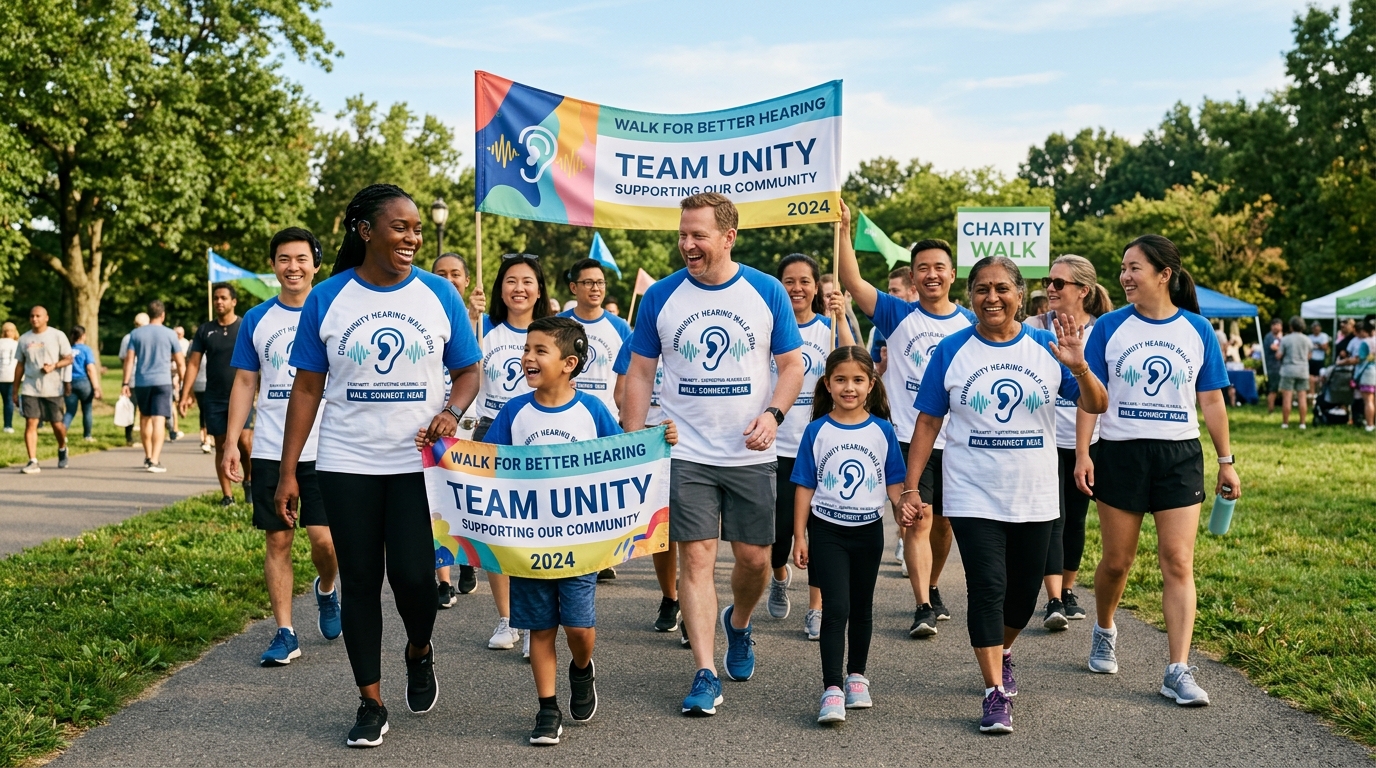
Behind every successful CI walk is a significant organizational effort that typically begins months before the event date. Understanding this process helps potential organizers and participants appreciate what goes into creating these community experiences.
The organizing body, whether it is HLAA nationally or a local cochlear implant advocacy group, selects a venue and date first. Venues are typically open outdoor spaces such as parks, stadiums, or waterfront areas that can accommodate hundreds or thousands of walkers comfortably. The walk route is mapped, measured, and coordinated with local authorities for any necessary permits.
Registration systems are set up online to allow individuals and teams to sign up, create fundraising pages, and track their progress toward financial goals. Sponsor outreach begins early, with hearing technology companies, medical device manufacturers, audiology clinics, and local businesses often providing significant financial and in-kind support.
On event day, volunteers manage registration tables, route signage, refreshments, first aid stations, and the stage program. Guest speakers including cochlear implant recipients, audiologists, and advocacy leaders share their stories and inspire the crowd before the walk begins.
Who Participates in CI Walk Events?
The participant community at a CI walk is more diverse than many people expect. The events draw people from every stage of the cochlear implant journey and from many different relationships to hearing loss.
Cochlear implant recipients of all ages participate, from toddlers walking with their parents to elderly adults who received their implant later in life. For many of these recipients, the CI walk is a rare opportunity to be surrounded by others who truly understand their experience.
Parents and family members of CI recipients are among the most passionate participants. For parents of children who were implanted as infants or toddlers, CI walks represent a community that validates their journey and gives their children visible role models of thriving cochlear implant users.
Audiologists, hearing rehabilitation specialists, cochlear implant surgeons, and other hearing healthcare professionals frequently participate as team members or event sponsors. Their presence reinforces the collaborative relationship between the medical community and the patients they serve.
Corporate teams from cochlear implant manufacturers including Cochlear Americas, MED-EL, and Advanced Bionics often participate with large groups and significant fundraising contributions.
How CI Walk Raises Funds and Awareness
Fundraising at CI walk events operates through a peer-to-peer model that has proven highly effective for community health causes. Each registered participant creates a personal fundraising page that they share with their own network of family members, friends, coworkers, and social media connections.
This model works because it transforms every participant into an ambassador for the cause. When someone asks their network to donate to their CI walk fundraising page, they also explain why the cause matters to them personally. This personal storytelling is far more persuasive and emotionally resonant than any mass marketing campaign.
Teams amplify this effect by pooling individual fundraising efforts. A team of ten people each raising $200 individually creates a combined contribution of $2,000 that demonstrates genuine community mobilization. Top fundraising teams at national CI walk events often raise tens of thousands of dollars through coordinated outreach.
Awareness grows alongside fundraising because each donation request comes with a story. People who have never thought about cochlear implants or hearing loss access find themselves reading about a friend’s CI journey or a family member’s implant experience. This organic awareness spreading is one of the most valuable outcomes of the CI walk model.
What Happens on CI Walk Day?
For first-time participants, knowing what to expect on CI walk day makes the experience more enjoyable and meaningful. The schedule is typically welcoming, celebratory, and accessible to participants of all ages and mobility levels.
Registration opens before the main program begins, typically one to two hours before the walk starts. Participants check in, collect their event materials including T-shirts, name badges, and team signs, and find their team gathering area.
The stage program opens the official event with welcome remarks from organizational leaders, personal stories from cochlear implant recipients, and acknowledgment of top fundraising teams. These presentations are often the most emotionally powerful part of the day, particularly when children who received cochlear implants share their own voices with the assembled crowd.
The walk itself follows the stage program. Participants move along the marked route at their own pace, in groups or as individuals, often carrying team banners and wearing coordinating team shirts. The atmosphere is festive and celebratory rather than competitive or exhausting.
After the walk, many events include time for community mingling, vendor and sponsor exhibits from hearing technology companies, refreshments, and additional prize recognition for fundraising achievement.
How to Register for a CI Walk Near You
Finding and registering for a CI walk event near you is straightforward through the HLAA Walk4Hearing platform and through other regional hearing advocacy organizations.
The most reliable starting point is the HLAA website at hearingloss.org, which lists all upcoming Walk4Hearing events by city and date. Each event listing provides registration links, team information, and local event contact details. Registration requires creating an account on the fundraising platform, providing basic information, and setting a personal fundraising goal.
Regional cochlear implant support groups often organize their own smaller walk events outside the national HLAA series. Searching for cochlear implant support groups in your city or state frequently surfaces these local events. Audiology clinics and cochlear implant centers are also excellent sources of information about upcoming local walk events since they are closely connected to the recipient community they serve.
How to Form a CI Walk Team
Forming a team is one of the most rewarding ways to participate in a CI walk. A team transforms a personal fundraising effort into a shared community experience and significantly increases both the funds raised and the awareness generated.
Teams can be built around a shared relationship to cochlear implants or simply around a shared desire to support the cause. Common team structures include families walking to honor a child or parent who is a CI recipient, audiology clinic staff walking together, corporate groups from hearing technology companies, school groups, and friend circles.
To form a team, the team captain registers first and creates a team name and page on the walk platform. Team members then join the existing team when they register. The captain coordinates communication, motivates the team toward its fundraising goal, and organizes logistics like coordinating team T-shirt colors or meeting spots on walk day.
Fundraising Tips for Your CI Walk Team
Effective fundraising for a CI walk does not require aggressive solicitation or significant time investment. A few simple strategies consistently produce strong results.
- Share your personal connection to cochlear implants honestly and specifically in your fundraising appeals
- Post your fundraising link on social media with a photo that tells your story visually
- Send personal messages rather than mass emails for your highest-priority asks
- Set a specific team goal and update your donors on progress toward it
- Thank each donor personally and publicly to encourage others to give
- Reach out to local businesses for team sponsorships in exchange for acknowledgment at the event
- Create a matching gift challenge where one donor agrees to match contributions up to a set amount
CI Walk and the Cochlear Implant Community
The cochlear implant community is a unique and deeply connected group defined not by geography or profession but by a shared life experience with a specific medical technology. CI walk events are among the most important touchpoints where this community comes together physically.
For cochlear implant recipients, being in a space filled with others who understand the experience of learning to hear, adjusting to a new sound processor, navigating school or work with a device, or advocating for themselves in medical settings is genuinely healing and empowering. Many recipients describe CI walk events as the first time they truly felt seen and celebrated for their journey rather than defined by their hearing loss.
International Cochlear Implant Day and Its Connection to CI Walk
International Cochlear Implant Day is observed every year on February 25th, marking the anniversary of the first cochlear implantation which took place on February 25, 1957. International Cochlear Implant Day was first celebrated in 2009 by Spanish cochlear implant users in a group called Federación AICE, an organization that includes several Spanish community member associations.
While CI Day itself is not a walk event, it shares the same spirit of community celebration and awareness that defines CI walk culture. Many walk organizers use CI Day as a promotional moment to announce upcoming walk dates, share CI stories on social media, and generate fresh interest in the cause.
The overlap between CI Day and the broader CI walk movement reflects a global community that is increasingly organized, visible, and vocal about the importance of cochlear implant access for people with severe hearing loss worldwide.
Organizations Behind CI Walk Events
Several important organizations drive CI walk events and hearing loss advocacy in the United States and internationally.
The Hearing Loss Association of America (HLAA) is the largest consumer organization for people with hearing loss in the United States. It operates the Walk4Hearing series and provides education, advocacy, and community support to its members nationally.
The Cochlear Implant Awareness Foundation (CIAF) is a nonprofit focused specifically on raising awareness of cochlear implants and providing equipment assistance to recipients in need. It runs the Hear Again program that accepts gently used cochlear implant equipment for redistribution.
The American Cochlear Implant Alliance (ACIALLIANCE) is a nonprofit whose mission is to advance access to cochlear implantation through research, advocacy, and awareness. It hosts the biennial CI conference and coordinates advocacy efforts at the federal level.
The Joyful Life Cochlear Implant Fund (JLCIF) helps uninsured and underinsured cochlear implant recipients with ongoing costs of maintaining external sound processors and offers confidence coaching for the emotional challenges of living with a CI.
The Emotional Impact of CI Walk on Recipients and Families
The emotional significance of CI walk events cannot be overstated. For families who have been on the cochlear implant journey, these events often represent a public declaration that their experience matters and that their community is real, large, and supportive.
Parents of children who received cochlear implants often describe CI walks as transformative moments in their own emotional processing of their child’s diagnosis. Seeing hundreds or thousands of other families celebrating the same journey replaces isolation with belonging and anxiety with confidence.
For adult CI recipients who spent years or decades struggling with profound hearing loss before receiving an implant, walking among others who understand that experience carries an emotional weight that is difficult to convey to those who have not lived it.
How CI Walk Funds Are Used
Transparency about how CI walk fundraising dollars are used is important for donor confidence and community trust. The funds raised through CI walk events support a range of programs that directly serve cochlear implant recipients and the hearing loss community.
Educational resources are a major area of funding. This includes materials for healthcare providers about cochlear implant candidacy, resources for parents of newly implanted children, and guides for adults navigating the implantation process.
Advocacy work is another significant use of funds. Organizations use walk proceeds to support lobbying efforts for better insurance coverage, Medicare expansion for CI candidates, and legislative initiatives like the Hearing Device Coverage Clarification Act.
Direct assistance programs provide financial support to uninsured and underinsured recipients who need help covering equipment costs, replacement parts, batteries, and processor upgrades that insurance does not cover.
Virtual CI Walk Options
The COVID-19 pandemic accelerated the development of virtual CI walk options that have since become a permanent part of the event landscape. Virtual CI walks allow participants from anywhere in the world to join the cause without traveling to a physical event location.
Virtual participants register on the standard walk platform, create their fundraising pages, and complete their walk distance independently on the date of the event. They may walk around their neighborhood, on a treadmill, or at any location of their choosing. Results are logged digitally and contributions count toward team and event totals alongside in-person participants.
Virtual options have significantly expanded the geographic reach of CI walk communities, allowing recipients, family members, and supporters in rural areas or other countries to participate in events they could never attend in person. They have also made CI walk participation more accessible for recipients whose physical limitations make attending a large outdoor event challenging.
Conclusion
A CI walk is far more than a fundraising event. It is a visible, human expression of what the cochlear implant community stands for: access to sound, dignity in difference, and the transformative power of technology when paired with community support. Whether you are a cochlear implant recipient, the parent of one, an audiology professional, or simply someone who believes in hearing health equity, participating in a CI walk connects you to a movement that is changing lives one step at a time. Register for the next Walk4Hearing in your city, form a team, share your story, and walk for everyone who deserves to hear the world they live in.
Frequently Asked Questions
Q1. What does CI stand for in CI walk?
CI stands for Cochlear Implant. A CI walk is a community walking event that raises awareness and funds for cochlear implant recipients and people with hearing loss. It brings together recipients, families, healthcare professionals, and supporters in a shared advocacy and celebration event.
Q2. What is Walk4Hearing?
Walk4Hearing is the national CI walk series organized by the Hearing Loss Association of America. It has been held annually across cities in the United States for more than 20 years, raising funds for hearing health education, advocacy, and community support.
Q3. How long is a CI walk?
Most CI walk events follow a 5K route of approximately 3.1 miles. The walks are non-competitive and paced to be accessible for participants of all ages and fitness levels, including young children, elderly participants, and people with mobility considerations.
Q4. How do I find a CI walk near me?
The most reliable way to find a CI walk near you is to visit the HLAA website at hearingloss.org and check the Walk4Hearing event calendar. Regional hearing loss support groups and local cochlear implant clinics also frequently advertise upcoming walk events.
Q5. Can I participate in a CI walk if I am not a cochlear implant recipient?
Yes. CI walks welcome participants from all backgrounds including family members, friends, healthcare professionals, and general community supporters. You do not need to be a cochlear implant recipient to register, walk, fundraise, or volunteer.