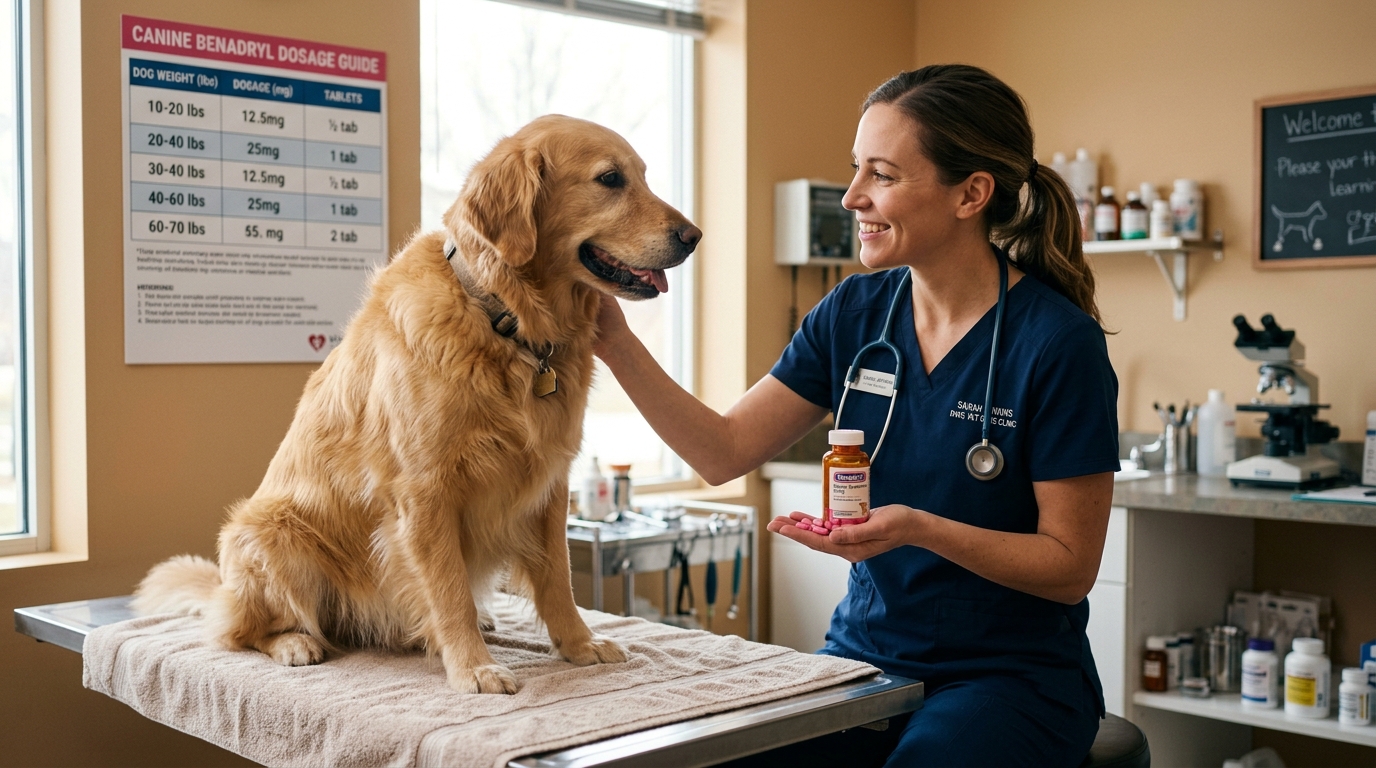
Pet owners often become worried when their dogs experience allergies, itching, swelling, anxiety, or reactions to insect bites. In many of these situations, one medication frequently recommended by veterinarians is Benadryl for dogs. Because it is commonly available in homes, many dog owners wonder whether it is truly safe, how much Benadryl for dogs is appropriate, and what the correct dosage should be according to body weight.
Although Benadryl can be useful for dogs in certain situations, it is extremely important to understand proper usage before giving it to any pet. A small dog and a large dog require very different doses, and using the wrong amount can potentially cause serious health problems.
What Is Benadryl for Dogs?
Benadryl is the brand name for diphenhydramine, an antihistamine medication commonly used to treat allergies in humans and animals. Veterinarians sometimes recommend it for dogs to help reduce allergic reactions, itching, swelling, and certain mild anxiety symptoms.
The medication works by blocking histamine receptors in the body. Histamines are chemicals released during allergic reactions, causing symptoms such as:
- Itching
- Swelling
- Sneezing
- Redness
- Watery eyes
When used properly and under veterinary guidance, Benadryl may help dogs feel more comfortable during allergic episodes.
However, not every form of Benadryl is safe for dogs. Some products contain additional ingredients such as decongestants or alcohol, which can be dangerous for pets. This is why reading labels carefully is extremely important.
Is Benadryl Safe for Dogs?
In many cases, veterinarians consider Benadryl safe for dogs when used correctly. The key factor is proper dosage and ensuring the product contains only diphenhydramine as the active ingredient.
Safety depends on:
- The dog’s weight
- Existing medical conditions
- Age and overall health
- Other medications being taken
While Benadryl is widely used, it should never be treated casually. Dogs can react differently to medications, and some breeds or health conditions may increase the risk of complications.
Veterinarians usually recommend consulting a professional before giving Benadryl for the first time, especially for puppies, elderly dogs, or pets with chronic health problems.
Why Veterinarians Recommend Benadryl for Dogs
Benadryl is commonly used because it can help manage several mild to moderate conditions in dogs without requiring stronger prescription medications.
Common Reasons Vets Recommend Benadryl
- Seasonal allergies
- Skin irritation and itching
- Bee stings or insect bites
- Mild anxiety during travel
- Swelling from allergic reactions
- Motion sickness symptoms
In emergency situations involving severe allergic reactions, Benadryl may sometimes provide temporary relief while owners seek immediate veterinary care.
How Benadryl Works in Dogs

Benadryl works by blocking histamine receptors in the dog’s body. Histamines are released during allergic responses and cause inflammation, itching, and swelling.
Once Benadryl enters the bloodstream, it reduces the effects of histamine activity. This can help decrease:
- Skin redness
- Swelling
- Itching sensations
- Sneezing and watery eyes
The medication also has mild sedative effects, which explains why some dogs become sleepy after taking it.
Common Uses of Benadryl for Dogs
Dog owners use Benadryl for several different situations, though veterinarian approval is always recommended.
Allergy Relief
One of the most common uses is treating environmental or seasonal allergies.
Insect Bites
Benadryl may help reduce swelling and itching caused by bee stings or bug bites.
Skin Irritation
Dogs with mild rashes or itching sometimes benefit from antihistamine support.
Travel Anxiety
Some dogs experience stress during car rides, and Benadryl’s mild sedative effect may help calm them.
Vaccination Reactions
Veterinarians occasionally recommend Benadryl if a dog develops mild swelling after vaccinations.
Benadryl for Dogs Dosage Explained
One of the most searched topics online is benadryl for dogs dosage because dosage accuracy is extremely important.
Veterinarians commonly recommend:
1 mg per pound of body weight1\ \text{mg per pound of body weight}
This dosage is typically given:
- Every 8 to 12 hours
- Depending on the dog’s condition
- Only under proper guidance
For example:
- A 25-pound dog may receive approximately 25 mg
- A 50-pound dog may receive approximately 50 mg
However, exact recommendations can vary based on:
- Medical history
- Breed sensitivity
- Age
- Existing medications
Never guess dosage amounts without checking weight carefully.
How Much Benadryl for Dogs by Weight
The phrase how much Benadryl for dogs is one of the most common concerns among pet owners.
Because dosage is weight-based, understanding the correct amount is essential.
General Weight-Based Guidelines
- Small dogs require very small doses
- Medium dogs may use standard tablet amounts
- Large dogs may require multiple tablets depending on weight
The safest approach is always calculating dosage according to pounds rather than estimating visually.
Benadryl for Dogs Dosage Chart
Below is a general Benadryl for dogs dosage chart commonly referenced by veterinarians. This is not a substitute for professional veterinary advice.
| Dog Weight | Approximate Benadryl Dose |
|---|---|
| 10 lbs | 10 mg |
| 20 lbs | 20 mg |
| 30 lbs | 30 mg |
| 40 lbs | 40 mg |
| 50 lbs | 50 mg |
| 60 lbs | 60 mg |
| 70 lbs | 70 mg |
| 80 lbs | 80 mg |
Most standard Benadryl tablets contain:
- 25 mg diphenhydramine
Always double-check product strength before giving medication.
Different Forms of Benadryl for Dogs
Benadryl comes in multiple forms, but not all are equally safe for dogs.
Tablets
The most commonly recommended form because dosage is easier to control.
Liquid Benadryl
Sometimes used for smaller dogs, but ingredients must be checked carefully.
Capsules
Can be used if the dosage matches the dog’s needs.
Products to Avoid
Avoid Benadryl products containing:
- Alcohol
- Xylitol
- Decongestants
- Extra active ingredients
These can be toxic to dogs.
How to Give Benadryl to Dogs Safely
Some dogs willingly take medication, while others resist strongly. Proper administration helps reduce stress for both the pet and owner.
Helpful Methods
- Hide tablets inside treats
- Use pill pockets
- Mix medication with food if approved
- Follow dosing schedules carefully
Always monitor the dog afterward to ensure there are no negative reactions.
Side Effects of Benadryl for Dogs
Even when used correctly, Benadryl may cause side effects in some dogs.
Common Side Effects
- Drowsiness
- Dry mouth
- Mild sedation
- Reduced energy
- Increased thirst
Some dogs may experience the opposite reaction and become hyperactive instead of sleepy.
More Serious Side Effects
- Rapid heartbeat
- Difficulty breathing
- Severe lethargy
- Vomiting
- Seizures
Serious symptoms require immediate veterinary attention.
Dogs That Should Avoid Benadryl
Not every dog is a good candidate for Benadryl treatment.
Dogs with certain medical conditions may face increased risks.
Conditions Requiring Caution
- Heart disease
- Glaucoma
- High blood pressure
- Thyroid disorders
- Liver disease
Pregnant or elderly dogs should only use Benadryl under veterinary supervision.
Benadryl Interactions With Other Medications
Benadryl can interact with certain medications, which is why veterinary consultation matters.
Potential Medication Interactions
- Sedatives
- Anxiety medications
- Pain medications
- Certain antifungal drugs
Combining medications incorrectly may increase sedation or other complications.
Benadryl for Puppies
Puppies are especially sensitive to medications because their bodies are still developing.
Veterinarians may sometimes approve Benadryl for puppies, but dosage must be extremely precise.
Owners should never medicate puppies without professional guidance because overdose risks are significantly higher in young dogs.
Benadryl for Dog Allergies
Allergies are one of the main reasons owners search for Benadryl information online.
Dogs can develop allergies from:
- Pollen
- Grass
- Dust
- Food ingredients
- Insect bites
Benadryl may help reduce symptoms temporarily, but chronic allergies often require deeper veterinary evaluation.
Benadryl for Anxiety and Travel
Some dog owners use Benadryl during travel because of its mild sedative effects.
Dogs experiencing:
- Car anxiety
- Nervousness
- Mild stress during trips
may appear calmer after taking Benadryl.
However, sedation is not the same as true anxiety treatment. Dogs with severe anxiety may need behavioral training or specialized veterinary care.
Benadryl for Insect Bites and Skin Problems
Bee stings and bug bites can cause swelling and discomfort in dogs. Benadryl is often recommended in mild cases because it helps reduce histamine reactions.
Common Symptoms After Insect Bites
- Swelling
- Itching
- Red skin
- Paw licking
If breathing problems occur, emergency veterinary care is necessary immediately.
Signs of Benadryl Overdose in Dogs
Overdose situations can become dangerous quickly.
Warning Signs of Overdose
- Extreme sleepiness
- Hyperactivity
- Tremors
- Rapid heartbeat
- Difficulty breathing
- Seizures
If overdose is suspected, contact a veterinarian immediately.
When to Call a Veterinarian
Benadryl should never replace professional veterinary care in serious situations.
Seek Immediate Veterinary Help If
- Symptoms worsen rapidly
- The dog struggles to breathe
- Swelling spreads quickly
- Severe vomiting occurs
- The dog collapses
Quick action can save a dog’s life during serious allergic reactions.
Natural Alternatives to Benadryl for Dogs
Some owners prefer natural allergy management methods.
Possible Alternatives
- Omega-3 supplements
- Oatmeal baths
- Hypoallergenic diets
- Air purification systems
- Veterinary-approved natural supplements
Natural approaches may help reduce allergy triggers over time.
Vet Tips for Safe Benadryl Use
Veterinarians generally recommend several important precautions.
Important Safety Tips
- Always calculate dosage carefully
- Use only plain diphenhydramine products
- Monitor dogs after first use
- Avoid combining medications without approval
- Store medication safely away from pets
These simple steps reduce risks significantly.
Common Myths About Benadryl for Dogs
There are many misconceptions online regarding Benadryl.
Myth 1: Benadryl Is Safe for Every Dog
False. Some dogs have conditions that make Benadryl risky.
Myth 2: More Benadryl Works Better
Incorrect. Overdosing can become dangerous very quickly.
Myth 3: All Benadryl Products Are Identical
False. Some contain harmful extra ingredients.
Understanding these myths helps owners use medications more responsibly.
Conclusion
Benadryl for dogs can be a useful medication for allergies, itching, swelling, mild anxiety, and insect bites when used correctly. However, proper dosage is absolutely essential. Questions such as how much Benadryl for dogs, Benadryl for dogs dosage, and Benadryl for dogs dosage by weight are important because incorrect dosing may lead to serious health complications.
The general recommendation of approximately 1 mg per pound provides a common starting guideline, but every dog is different. Factors such as age, health conditions, medications, and breed sensitivities can affect safety.
Pet owners should always prioritize veterinary guidance before giving medications to dogs, especially puppies, senior dogs, or pets with existing medical conditions. Responsible use, careful monitoring, and accurate dosage calculations are the keys to keeping dogs safe and comfortable.
FAQs
1. Is Benadryl safe for dogs?
Yes, plain Benadryl containing only diphenhydramine is often considered safe when used correctly under veterinary guidance.
2. How much Benadryl for dogs should I give?
The common guideline is about 1 mg per pound of body weight.
3. What is the correct Benadryl for dogs dosage?
Dosage depends on weight, age, and health condition. Veterinary advice is always safest.
4. Can puppies take Benadryl?
Sometimes, but only under professional veterinary supervision.
5. What are the side effects of Benadryl for dogs?
Common side effects include drowsiness, dry mouth, and mild sedation.
6. How often can dogs take Benadryl?
Typically every 8–12 hours, depending on veterinary recommendations.