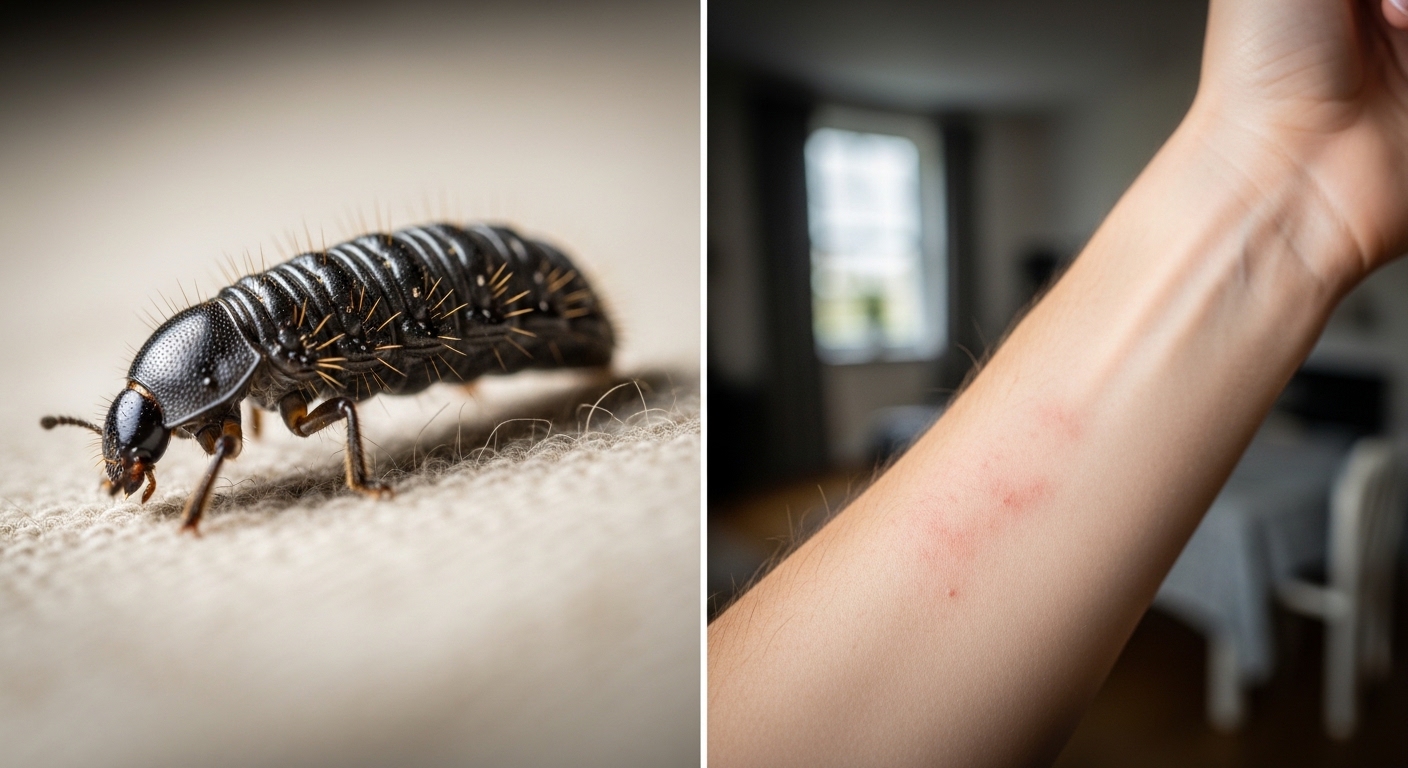
carpet beetle bites often create confusion because most people do not even realize what caused their sudden skin irritation. You might wake up with small red bumps or itchy patches and instantly blame mosquitoes or bed bugs. However, the real culprit can be something far less obvious hiding in your home. Carpet beetles themselves do not bite in the traditional sense, but their tiny larvae shed hairs that trigger allergic reactions on human skin.
This misunderstanding leads many people to treat the symptoms instead of solving the root problem. Once you understand how these pests operate, it becomes much easier to protect your skin and your living space. This article breaks down everything you need to know, from identifying the irritation to eliminating the source permanently. carpet beetle bites.
What people call carpet beetle bites is actually a skin reaction
The term carpet beetle bites sounds straightforward, but it is slightly misleading. Adult beetles do not bite humans at all. The irritation comes from larvae, which are small, fuzzy creatures often hidden in carpets, fabrics, or dark corners.
These larvae have tiny hair-like bristles that can irritate the skin. When these hairs come into contact with your body, they trigger an allergic reaction in some people. This reaction can look very similar to insect bites, which is why it is often misdiagnosed.
Understanding this difference helps you focus on removing larvae instead of worrying about biting insects. carpet beetle bites.
How to recognize carpet beetle related skin irritation
Skin reactions from carpet beetle larvae vary from person to person. Some people experience mild itching, while others develop noticeable rashes.
The affected areas usually appear as small red bumps, clusters of tiny welts, or slightly raised patches. You might notice them on exposed skin such as arms, neck, or legs. Unlike mosquito bites, these reactions often feel more like a rash than individual puncture marks.
Another clue is timing. If the irritation appears after sleeping or spending time in a specific room, it could point to carpet beetles hiding nearby. carpet beetle bites.
Where these pests hide without you noticing
Carpet beetles thrive in places that collect natural fibers and organic debris. This makes many homes an ideal environment for them to grow unnoticed.
They often hide in carpets, rugs, upholstered furniture, and even clothing stored for long periods. Closets, under beds, and corners of rooms are common hotspots. They also feed on lint, pet hair, and dead skin cells, which means even clean homes can attract them.
Because they stay hidden, infestations can grow quietly until skin irritation becomes the first visible sign. carpet beetle bites.
Why your home suddenly has carpet beetles
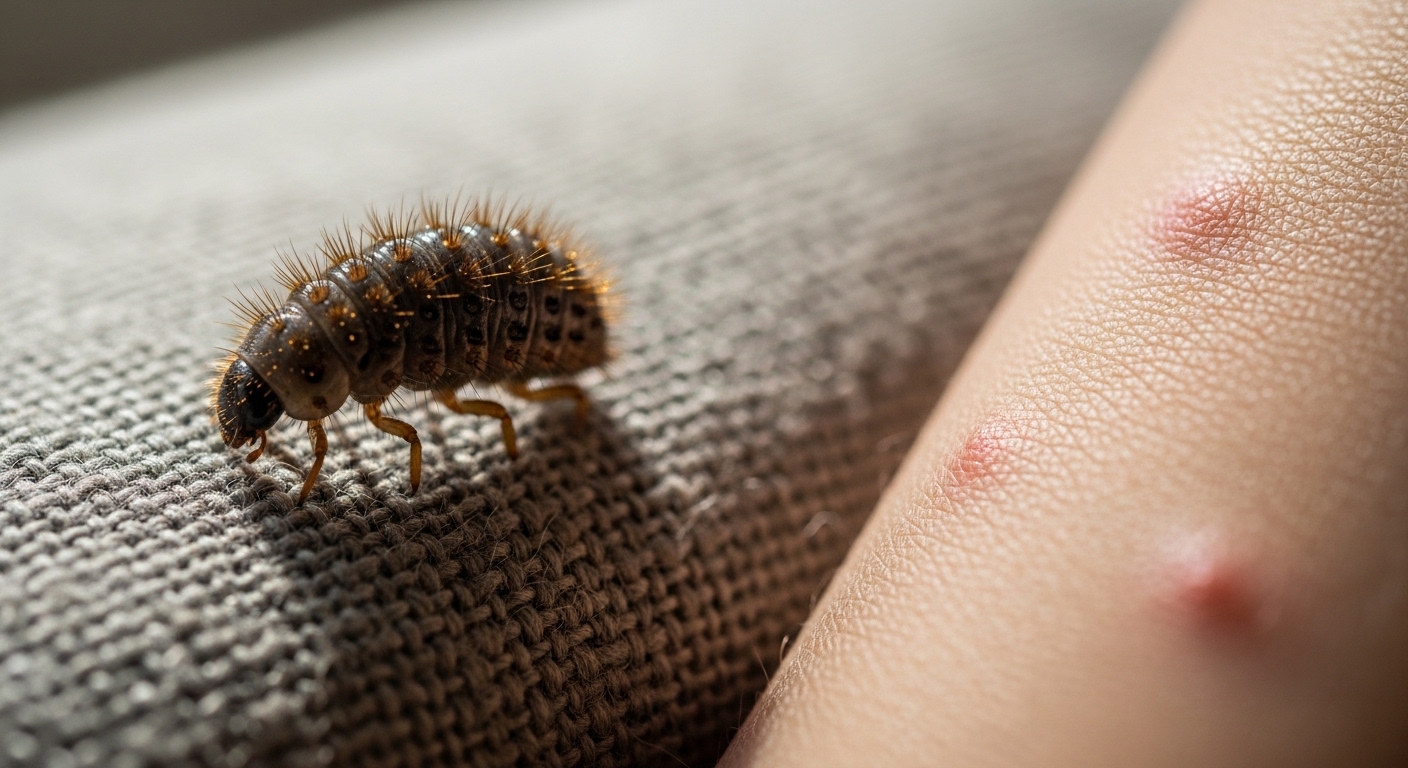
Carpet beetles do not appear out of nowhere. They usually enter homes through open windows, doors, or even on items like flowers and clothing.
Once inside, they look for dark, undisturbed areas to lay eggs. Seasonal changes can also play a role, as warmer temperatures encourage their activity. Homes with natural fabrics, stored clothing, or less frequent cleaning provide ideal conditions for them to thrive.
Recognizing how they enter helps you block their access and reduce future infestations. carpet beetle bites.
Effective ways to get rid of carpet beetle larvae
Eliminating the source of irritation requires targeting the larvae directly. Quick action prevents the problem from spreading further.
Start by vacuuming thoroughly, especially carpets, corners, and under furniture. Focus on areas that rarely get cleaned. Dispose of the vacuum bag immediately to avoid recontamination.
Wash all affected fabrics in hot water. This includes bedding, clothing, and curtains. Heat kills both larvae and their irritating hairs. carpet beetle bites.
For deeper infestations, consider using insecticides specifically designed for carpet beetles. However, always follow safety instructions carefully. Natural solutions like diatomaceous earth can also help by dehydrating the larvae.
Simple cleaning habits that stop them from returning
Consistency is your best defense against carpet beetles. Regular cleaning disrupts their life cycle and prevents reinfestation.
Vacuum your home frequently, especially in hidden areas. Keep closets organized and avoid storing unwashed clothing for long periods.
Reduce clutter, as it creates hiding spots for larvae. Make sure windows and doors are properly sealed to limit entry points.
These habits not only eliminate current problems but also protect your home in the long run. carpet beetle bites.
Treating the skin irritation the right way
While removing the source is essential, you also need to address the discomfort on your skin.
Mild reactions can be treated with soothing creams or antihistamines to reduce itching. Keeping the affected area clean and avoiding scratching helps prevent further irritation. carpet beetle bites.
In more severe cases, consulting a healthcare professional ensures proper treatment. Most reactions fade quickly once exposure stops, so eliminating larvae remains the most important step.
Carpet beetles vs other common pests
Misidentifying the cause of skin irritation leads to ineffective solutions. Comparing carpet beetle reactions with other pests can help you spot the difference.
Bed bug bites often appear in straight lines or clusters and include visible bite marks. Mosquito bites are usually isolated and accompanied by a distinct puncture point.
Carpet beetle reactions, on the other hand, resemble rashes and lack clear bite marks. This subtle difference can save you from unnecessary treatments. carpet beetle bites.
The hidden damage beyond skin irritation
Carpet beetles do more than irritate your skin. Their larvae can damage fabrics, carpets, and clothing made from natural fibers.
You might notice small holes in wool, silk, or cotton items. Over time, this damage can become costly if left untreated.
Addressing the problem early protects both your health and your belongings. carpet beetle bites.
Conclusion
Carpet beetle bites may seem mysterious at first, but once you understand the real cause, the solution becomes clear. These tiny pests rely on hidden spaces and neglected areas to thrive, making awareness your strongest advantage. carpet beetle bites.
By combining proper cleaning habits with targeted treatment, you can eliminate both the irritation and its source. A clean, well-maintained home not only keeps carpet beetles away but also restores your sense of comfort and control.
Frequently Asked Questions
Do carpet beetles actually bite humans?
Carpet beetles do not bite humans. The irritation comes from the tiny hairs on their larvae, which cause allergic reactions on the skin.
How long do carpet beetle skin reactions last?
Most reactions last a few days to a week. Once you remove the source of exposure, the irritation usually fades quickly.
Are carpet beetles dangerous?
Carpet beetles are not dangerous in terms of spreading disease, but they can cause discomfort and damage household items.
Can carpet beetles live in beds?
Yes, they can hide in bedding, especially if it contains natural fibers or is not cleaned regularly.
What is the fastest way to get rid of carpet beetles?
Thorough vacuuming, washing fabrics in hot water, and eliminating hidden larvae are the fastest and most effective methods.