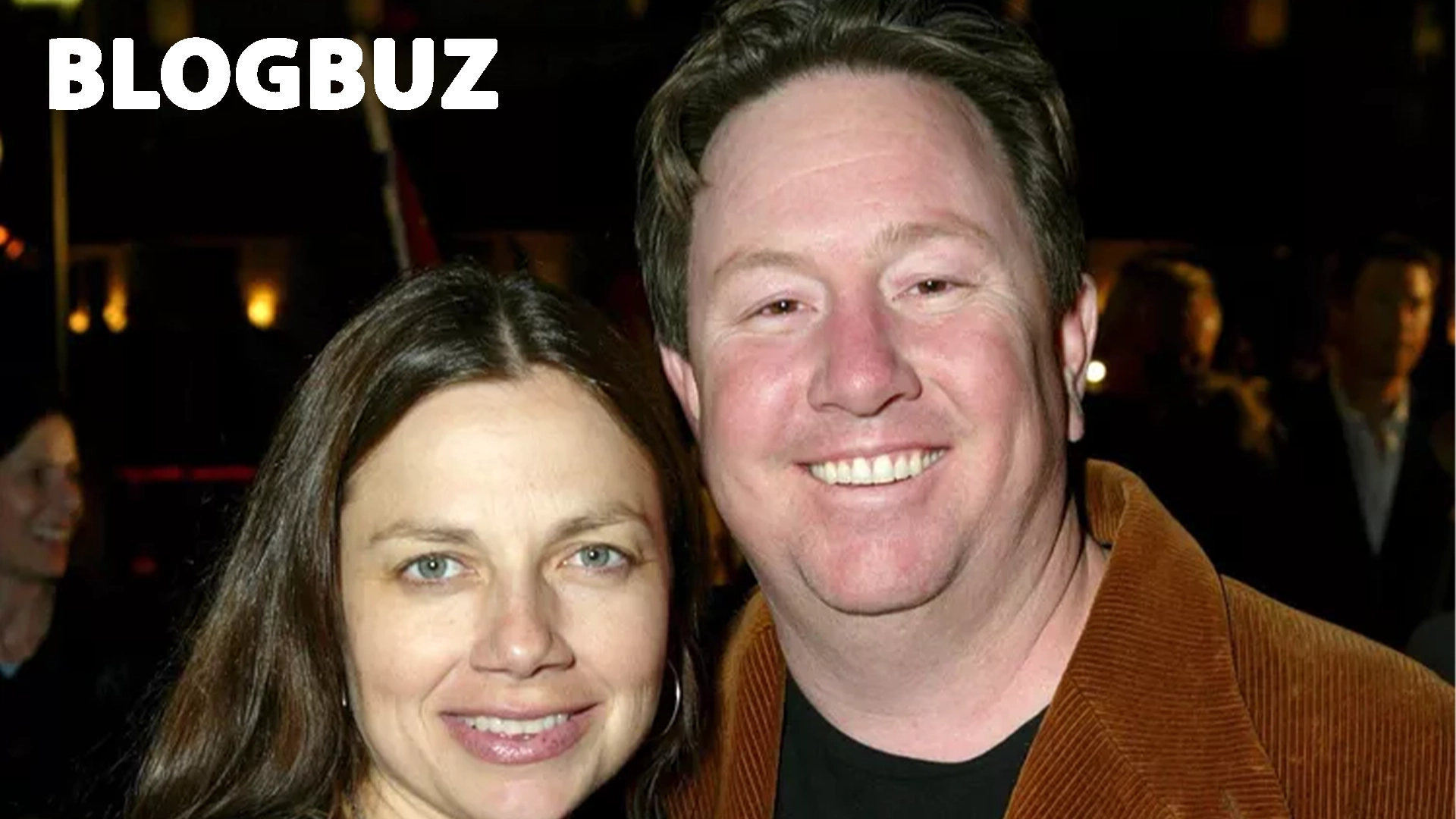
There is a particular kind of power that does not announce itself. It does not hold press conferences, it does not court media attention, and it does not arrive at events specifically designed to be photographed. It simply shows up, does the work, makes the decisions, and shapes outcomes quietly, methodically, and with a precision that those loud enough to dominate headlines rarely possess. Lauren Rappoport is that kind of power.
Lauren Rappoport is an American real estate executive and former attorney, best known for her senior leadership role in luxury real estate sales and marketing at The Witkoff Group. She is a respected figure in the U.S. real estate industry, known for her strategic thinking, strong legal background, and long-term executive leadership. She built her career through discipline, education, and practical experience rather than public attention.
To the general public, her name surfaced most prominently in connection with her husband, real estate billionaire Steve Witkoff a man whose own name has grown into a global brand, now recognized not just in the towers of Manhattan but in the diplomatic corridors of the Middle East. But reducing Lauren Rappoport to the label of Steve Witkoff’s wife is the kind of oversimplification that does a genuine disservice to a woman who walked her own professional path long before that marriage and continued walking it long after.
Lauren Rappoport began her career in law, building a strong foundation through early roles at New York firms where she sharpened her skills in negotiation, strategy, and high-stakes problem solving. Her breakthrough came when she transitioned from law into real estate, joining the Witkoff Group and quickly becoming a driving force behind the company’s residential sales strategy.
Lauren Jill Rappoport is a woman defined by competence. Her story spans academic distinction, rigorous legal training, a calculated pivot into real estate leadership, and the deeply human experience of loving a family through both extraordinary success and devastating loss. This article is a complete and honest portrait of who she is professionally, personally, and everything in between.
Quick Bio Table
| Detail | Information |
|---|---|
| Full Name | Lauren Jill Rappoport |
| Known As | Lauren Rappoport Witkoff |
| Nationality | American |
| Ethnicity | Jewish-American |
| Education | University of Rochester (Magna Cum Laude); George Washington University Law School (J.D.) |
| Profession | Attorney (Former); Executive Vice President, Sales & Marketing Witkoff Group |
| Married To | Steve Witkoff (m. 1987; later separated) |
| Children | Andrew Witkoff (deceased, 2011), Alexander (Alex) Witkoff, Zachary (Zach) Witkoff |
| Former Law Firms | Dreyer & Traub; Botein, Hays & Sklar (NYC) |
| Joined Witkoff Group | 2012 |
| Husband’s Net Worth | Estimated $2 billion (2026) |
| Residence | Upper East Side, Manhattan, New York |
| Public Profile | Extremely private |
| Philanthropic Focus | Addiction awareness, mental health, animal welfare, cancer research |
Early Life and Family Background
Lauren Jill Rappoport was born and raised in the United States, though the specific details of her birthdate and childhood home have never been made public. This privacy is not accidental. It is a pattern that defines her entire life a deliberate, consistent choice to keep the personal out of the professional sphere and to let her work, rather than her biography, speak for itself.
Lauren Rappoport was born and raised in the United States. Though Lauren Rappoport keeps her early family life private, her career makes it clear she grew up with strong values around discipline, ambition, and professional excellence.
What we can observe from the trajectory of her life is that she grew up in an environment that valued education deeply. The decision to pursue a degree in political science at one of the country’s respected universities, and then to follow that with a law degree at a prestigious Washington institution, does not happen by accident. It reflects a household that took intellectual development seriously parents who expected their daughter to build something with her mind, to use knowledge as both a foundation and a tool.
Although Lauren Rappoport’s exact age has not been made public, her professional milestones and educational background strongly suggest she is in her late 50s or early 60s. Despite the curiosity, she has managed to maintain a relatively private personal life, with few details shared publicly outside of her marriage and children.
Her Jewish heritage, while rarely discussed in public, forms another dimension of her identity. In the context of a family that has now become intertwined with diplomatic work in the Middle East and with deep ties to Jewish cultural institutions in New York, this background carries its own quiet significance. Lauren Rappoport did not shape her public identity around her religion, but it is part of the full picture of who she is.
Academic Excellence From Rochester to George Washington Law
If you want to understand how Lauren Rappoport became the person she is professionally, you have to start here in the classrooms and lecture halls where she built the analytical framework that would underpin every decision she made afterward.
Lauren Rappoport’s professional journey began with a strong academic background. She studied political science and later pursued legal education, which prepared her for a demanding professional career. She graduated magna cum laude from the University of Rochester, reflecting high academic achievement. She later earned her Juris Doctor from George Washington University Law School, where she developed advanced legal knowledge. This academic foundation helped shape her analytical thinking and professional discipline.
Graduating magna cum laude is not a minor distinction. At a competitive university like Rochester, it signals not just intelligence but sustained, rigorous effort across an entire academic program. It signals that the person on that stage chose depth over breadth, chose to truly understand her field rather than simply pass through it. Political science as an undergraduate major is particularly telling it is the study of power, institutions, systems, and strategy. For someone who would go on to operate in the high-stakes world of New York real estate, where political connections, regulatory environments, and negotiation are daily realities, that academic foundation was almost prescient.
The decision to then pursue a Juris Doctor at George Washington University Law School deepened that foundation further. GW Law, situated in Washington D.C., trains students in the practical realities of federal law, regulatory structures, and the intersection of business and legal frameworks. For a woman who would eventually apply legal thinking to some of the most complex real estate transactions in the country, the choice of law school was perfectly aligned with where her career would eventually go even if she did not know it yet.
These years in education were not simply about credentials. They were about the formation of a particular kind of mind: one that approaches problems systematically, that looks at the full picture before making a move, and that understands the difference between what is legal, what is strategic, and what is wise. Lauren Rappoport would carry all three qualities with her into every role she occupied afterward.
Lauren Rappoport’s Legal Career in New York City
After completing her law degree, Lauren Rappoport stepped into one of the most demanding legal markets in the world New York City. The legal landscape of New York in the late 1980s and 1990s was competitive, fast-moving, and unforgiving. To build a reputation there required not just competence but a particular sharpness of mind and an ability to perform under pressure.
After law school, Lauren Rappoport embarked on a legal career in New York City. She worked as a real estate attorney with respected firms including Dreyer & Traub and Botein, Hays & Sklar, focusing on complex property transactions and commercial leases. This experience laid the groundwork for her strategic mindset in deal-making.
Both Dreyer & Traub and Botein, Hays & Sklar were genuine players in the New York legal market. These were not entry-level, paper-shuffling firms. They handled real transactions property deals involving millions of dollars, commercial leases with complex multi-party structures, and negotiations where the margin for error was essentially zero. Working at this level, as a real estate attorney focused on complex property transactions and commercial leases, meant that Lauren Rappoport was being formed in a crucible of precision and consequence.
Being part of a prominent law firm, Lauren gained invaluable experience and exposure to the intricacies of legal practices, which later helped her navigate the complex world of real estate investments and corporate dealings.
Real estate law at this level is not simply about property titles and closing documents. It involves understanding zoning regulations, environmental compliance, financing structures, investment agreements, and the legal architecture of development partnerships. Every complex transaction that Lauren reviewed or worked on during these years was essentially a masterclass in how the real estate world actually functions beneath its polished public surface. She learned not just the law but the industry and that dual knowledge would prove invaluable when the time came to move from law into leadership.
It was also during this period, working as an associate at Botein, Hays & Sklar, that Lauren Rappoport’s personal and professional worlds intersected in a defining way. It was here, in the world of New York real estate law, that she met the man who would become her husband and her partner in building one of the country’s most ambitious property development enterprises.
Transition from Law to Real Estate A Strategic Pivot
The move from practicing law to working in real estate leadership is not an uncommon one in the industry but Lauren Rappoport’s version of it was particularly well-calibrated. She did not simply leave law to follow a spouse into a family business. She made a strategic transition that used everything she had built in her legal career as direct fuel for what she would do next.
The transition from law to business wasn’t an accident it was a strategic move. Lauren Rappoport used her legal expertise to navigate complex high-profile real estate deals with clarity and confidence. She understood the intricate nature of commercial leasing specialist agreements. She used her deep understanding of contracts to secure long-term value for the family-owned real estate business. Her approach turned risks into opportunities, setting a new tone for women in leadership in the property sector.
This is an important distinction. Many people who move from one field to another leave the first field behind entirely, treating the transition as a break rather than a build. Lauren Rappoport did the opposite. Her legal background became her most valuable asset in real estate precisely because it gave her something most marketing and sales executives do not have: the ability to read and understand the full legal architecture of a deal. She could sit in a room with attorneys, developers, investors, and brokers, and operate fluently in all of their languages simultaneously.
Lauren’s legal acumen offered a smooth transition into real estate leadership. Today, she serves as Executive Vice President of Sales and Marketing at the Witkoff Group, leveraging her negotiation skills and sharp legal insights to shape marketing strategy and drive high-end developments. Her presence in the boardroom is both strategic and quietly influential.
The luxury real estate market, especially in New York, Miami, and other major American cities where the Witkoff Group operates, is not simply a business of beautiful buildings and high-end finishes. It is a business of trust, timing, positioning, and narrative. Buyers at this level are sophisticated. They are not purchasing a home they are making a financial decision, a lifestyle statement, and often an investment. Reaching them, persuading them, and converting them into buyers requires a depth of strategy that goes well beyond traditional marketing. Lauren Rappoport, with her legal precision layered over a genuine understanding of the real estate market, was ideally positioned to do exactly that.
Lauren Rappoport Witkoff at the Witkoff Group

In 2012, Lauren joined The Witkoff Group as the Executive Vice President of Sales and Marketing. The Witkoff Group is known for its luxury residential and commercial developments, and Lauren quickly became a key player in the company’s sales efforts.
The Witkoff Group, by 2012, was already a serious force in American real estate. Founded by Steve Witkoff in 1997, the company had developed a reputation for identifying undervalued properties, acquiring them strategically, and transforming them into high-value assets. The portfolio spanned iconic New York buildings, luxury hotels, and major residential developments. Joining this company in an executive leadership role was not a lateral move. It was a step into one of the most demanding and high-profile real estate environments in the country.
As the Executive Vice President of Sales and Marketing, Lauren oversees a variety of important tasks, including: Sales Strategy Development Lauren works on creating sales strategies that align with market trends and maximize revenue for The Witkoff Group. Client Relations building and maintaining relationships with clients, investors, and stakeholders is crucial to Lauren’s role. Team Leadership Lauren also leads a team of sales and marketing professionals at Witkoff, ensuring the team remains focused on achieving the company’s goals.
What makes Lauren Rappoport’s contribution to the Witkoff Group particularly significant is the nature of the role itself. Executive Vice President of Sales and Marketing for a luxury real estate firm is not a ceremonial title. It is an operational command. She is responsible for how properties are presented to the world the story they tell, the buyers they attract, the pricing strategy that positions them in the market, and the sales execution that converts interest into closed deals. All of this happens against the backdrop of a fiercely competitive luxury market where perception is everything.
Under her leadership, The Witkoff Group has successfully positioned multiple high-value projects in competitive real estate markets. Her approach emphasizes quality, trust, and strategic timing rather than short-term trends.
Her leadership philosophy within the company reflects the same discipline that characterized her legal career. She is not a flashy executive. She does not manage through broad inspiration or public performance. She manages through structure, data, and accountability building systems that deliver results consistently rather than occasionally. This is the kind of leadership that sustains organizations over the long term, and it has been central to how the Witkoff Group has maintained its position in the luxury market across multiple economic cycles.
She skillfully turned risks into opportunities, setting a bold tone for women in leadership across the property sector. Her approach blended sharp strategy with practical insight, showing how legal expertise can directly fuel success in real estate leadership.
In a sector still dominated by men particularly at the executive and ownership level Lauren Rappoport’s presence in a senior leadership role at one of the country’s major development firms carries a significance that extends beyond her personal career. She represents a model of what female leadership in high-stakes real estate can look like: not built on performative visibility, but on earned competence and delivered results.
Lauren Rappoport and Steve Witkoff The Marriage That Built an Empire
Every great real estate dynasty has a story behind it. Behind the towers, the acquisitions, the billion-dollar deals, there are human beings who made choices personal and professional that set the entire enterprise in motion. For the Witkoff empire, that foundational story begins with a marriage.
In 1987, Witkoff married Lauren Jill Rappoport, a lawyer. They later had three sons: Andrew, Alex, and Zach Witkoff.
The year 1987 is significant. Steve Witkoff had not yet founded the Witkoff Group that would come a decade later. He was, at that point, a real estate lawyer building his reputation, and Lauren was also working as a legal associate in New York. Their marriage was not the joining of an established empire with a partner it was two people at the beginning of their careers, both legally trained, both ambitious, both oriented toward the world of property and development. The shared professional foundation they brought to the marriage created a particular kind of partnership: one where both parties understood the work at a deep, technical level.
In 1987, he married Lauren Jill Rappoport, who, at that time, was an associate at a Manhattan law firm. The two later became good friends with Donald Trump during this period, as Witkoff worked in New York real estate.
The life they built together over the following decades was set against the backdrop of one of the most dramatic periods in New York real estate history. The 1990s brought boom and bust cycles, massive commercial development, and the transformation of neighborhoods across Manhattan. Steve’s career trajectory accelerated through all of it from attorney to co-founder of Stellar Management, to founding the Witkoff Group in 1997, to building a portfolio that would eventually be valued in the billions. Through all of it, Lauren was a constant managing the household, raising their three sons, and gradually building her own professional role within the family enterprise.
Lauren married Steve Witkoff in 1987, forming one of New York’s most respected real estate power couples. Their shared vision built a lasting family legacy that extended beyond development and into community service. The couple has three sons Andrew Witkoff, Alex Witkoff, and Zachary (Zach) Witkoff. Each son has taken an active role in the family-owned real estate business, ensuring continuity in both values and innovation. The children active in business ventures reflect Lauren’s influenz she instilled in them the importance of ambition grounded in ethics.
The phrase power couple is overused in modern media, but in the case of Lauren Rappoport and Steve Witkoff, it reflects something genuinely true. Both brought professional depth to their union. Both contributed to the empire that the Witkoff name would become. And both shaped the next generation of Witkoffs sons who would go on to lead companies, launch cryptocurrency ventures, and carry the family brand into entirely new industries.
Who Is Steve Witkoff? Understanding the Man Beside Lauren
To understand Lauren Rappoport Witkoff fully, it is necessary to understand who Steve Witkoff is not just as her husband, but as one of the most consequential real estate figures in modern American history.
Steve Witkoff is a real estate investor and developer, lawyer, and diplomat who has a net worth of $2 billion. Steve Witkoff serves as the United States Special Envoy to the Middle East. Having started his career as a real estate attorney, he transitioned to property investment and founded the Witkoff Group, through which he owns the Woolworth Building, the Daily News Building, and the Park Lane Hotel, among other major properties.
Steve Witkoff, a prominent American real estate investor and founder of the Witkoff Group, has seen his net worth reach an estimated $2 billion as of early 2026. Witkoff’s success is attributed to decades of successful real estate deals, including the acquisition and transformation of high-profile properties in New York, Los Angeles, and Miami. Additionally, his involvement in the cryptocurrency venture World Liberty Financial has further boosted his wealth.
The man who began his career as a real estate lawyer in New York became one of the city’s most aggressive and successful developers. His strategy identifying distressed or undervalued assets and transforming them through renovation, repositioning, and brand development proved extraordinarily effective. The Park Lane Hotel alone, purchased for $654 million and later sold for $1 billion, represents the scale of thinking that made him a billionaire.
In early 2025, Witkoff participated in the negotiations that led to a ceasefire and hostage exchange between Israel and Hamas. This transition from real estate developer to diplomatic envoy is perhaps the most dramatic chapter yet in Steve Witkoff’s career and it has brought the Witkoff name into global conversations that go far beyond property development.
For Lauren Rappoport, the woman who married this man in 1987 when he was still a lawyer building his career, the trajectory of the life they built together has been extraordinary marked by achievement, tragedy, complexity, and change.
Their Life Together on the Upper East Side
He married Lauren Rappoport in 1987. Together, they built a family and raised their children on Manhattan’s Upper East Side. The neighborhood is known for its affluence and sophistication, mirroring Witkoff’s successes in real estate.
The Upper East Side of Manhattan is one of the most distinct neighborhoods in the world. It is the address of institutions major museums, elite private schools, long-established families, and the kind of quiet, tasteful wealth that does not need to announce itself. For Lauren Rappoport, who had always preferred substance over spectacle, it was the right environment. It offered access to the cultural and educational resources that she valued for her sons, while maintaining the kind of community that respected privacy.
The family life they built there was, by all available accounts, one centered on education, work ethic, and family values. Their three sons Andrew, Alexander, and Zachary grew up in a home where professional ambition was normalized, where intellectual engagement was expected, and where the responsibilities that come with success were understood from an early age. Lauren, as the more private of the two parents, shaped much of this domestic environment. While Steve operated in the public sphere making deals, building the company’s public profile, developing relationships across the industry Lauren managed the quieter architecture of the family.
Despite her high-level career, Lauren Rappoport values privacy and family stability. Lauren is known for a disciplined and analytical leadership style. She focuses on facts, market research, and structured planning rather than publicity. Her decisions are guided by data, experience, and long-term value creation.
This balance between the public demands of a billion-dollar business family and the private values of a woman who had never sought the spotlight defined much of how the Witkoff household functioned. It is a balance that required constant, active maintenance, and Lauren Rappoport maintained it with the same steady competence she brought to everything else in her life.
The Tragedy That Changed Everything The Loss of Andrew Witkoff
There are moments in a life that split everything into before and after. For Lauren Rappoport, that moment came on August 14, 2011. It arrived not in a boardroom, not in a courtroom, not in any of the professional spaces where she had built her identity over decades but in the most private, devastating space a parent can inhabit: the loss of a child.
Andrew’s life ended tragically at the age of 22. On August 14, 2011, he passed away in Los Angeles, California. His death was officially attributed to an OxyContin overdose while he was residing in a sober-living facility. The loss of a child is one of the most devastating experiences any parent can endure, and Andrew’s passing deeply affected the entire Witkoff family.
Andrew Scott Witkoff was the eldest son of Lauren Rappoport and Steve Witkoff. He was born on January 3, 1989, and grew up on the Upper East Side of Manhattan in a family defined by ambition, creativity, and strong values. Like many young people who struggle with addiction, Andrew’s story was not one of neglect or indifference it was one of love that was not enough to stop an illness that does not respond to love alone.
Andrew was 22 when he died of an accidental overdose of oxycodone on Aug. 14, 2011. In March 2011, with plaintiffs’ consent and approval, Andrew entered a drug treatment program in Los Angeles, California, and had graduated to residence at a ‘half-way house’ facility in the weeks prior to his death.
The details of what happened in those final weeks are painful in their specificity. Andrew had been fighting his addiction. He had sought treatment. He had moved into a sober-living facility as part of his recovery process, which is itself an act of courage and intention. And then, despite all of it despite the treatment, despite the facility, despite the effort the illness found its way back in.
Andrew’s death was the result of an OxyContin overdose while staying at a sober-living facility in Los Angeles, California. Reports from the time revealed that Andrew had been battling substance dependency issues and that his stay at the facility was intended to be part of his recovery. His parents later filed a wrongful death lawsuit against the facility (One80Center) and some of its staff. The lawsuit alleged negligence claiming that Andrew was not adequately supervised, that he had access to drugs, and that mandatory urine tests were skipped or overlooked.
For Lauren Rappoport, a woman trained in the law, the decision to pursue legal action against the facility was both a grief response and a principled stand. She and Steve did not simply absorb the loss and retreat from it quietly. They chose to hold the institution accountable to use the legal system to demand answers and to ensure that what happened to their son could not happen to another family’s child through the same institutional failures. That decision reflects who Lauren is at her core: someone who meets even the most devastating circumstances with structure, purpose, and a determination to do something meaningful with the pain.
The Opioid Crisis Through a Mother’s Eyes
Andrew Witkoff’s death did not happen in isolation. It happened in the middle of an opioid epidemic that was quietly devastating American families across every economic bracket, every geography, and every demographic. The idea that wealth protects against addiction is one of the most dangerous myths in American public health and the Witkoff family’s experience dismantled it completely.
The tragedy of Andrew’s death became not just a personal wound for the Witkoff family but also a symbol of how devastating the opioid crisis has been for many American families regardless of wealth or social standing.
Lauren Rappoport has never given a public interview about the loss of her son. She has not written about it, spoken about it on camera, or used it as a platform for personal visibility. This silence is entirely consistent with who she is a woman who processes the deepest things in the deepest privacy. But the silence does not mean the experience failed to shape her. Everything that followed in her life, from her philanthropic choices to the causes her family publicly supported, was marked by what happened on August 14, 2011.
One of the most emotional moments in Lauren Rappoport’s life was the loss of her son Andrew Witkoff in 2011. Although Lauren never spoke publicly about this loss, it is clear that it shaped her life in a powerful way. This moment shows the human side of her story. Behind the success and wealth, there are real struggles and deep emotions.
Steve Witkoff, who is considerably more public than Lauren, has spoken about Andrew in ways that offer a window into what the family carried together. He has shared that Andrew’s death deeply connected him to the suffering of others particularly when, in his diplomatic role, he encountered families separated by conflict and hostage situations. He wore Andrew’s Star of David necklace every single day for nearly fifteen years after his son’s death. When he met Edan Alexander, an Israeli hostage who had been freed from captivity, he gifted that necklace to him a gesture that transformed private grief into a bridge between two families’ pain.
More recently, as a U.S. Middle East envoy, Steve Witkoff said that his son’s 2011 death from an opioid overdose has deeply connected him to the struggles of Israeli hostages. Steve Witkoff has openly shared that Donald Trump, a longtime friend, was by his side during the unbearable loss of his son Andrew.
For Lauren, the grief was carried differently internally, privately, and translated into action rather than public testimony. The philanthropic commitments the family made in the years following Andrew’s death reflect her influence: a steady, quiet insistence that the loss mean something beyond their own sorrow.
Lauren Rappoport’s Sons The Next Generation of Witkoffs
One of the most significant measures of a parent’s influence is the people their children become. By this measure, Lauren Rappoport’s impact on the next generation of Witkoffs is undeniable. Her two surviving sons Alexander and Zachary have both built professional identities of genuine substance, operating in industries that require intelligence, initiative, and resilience. These qualities do not emerge from nowhere.
Alexander (Alex) Witkoff
Alexander (Alex) has taken the helm as co-CEO of the Witkoff Group, continuing the family’s role in high-stakes real estate.
Alex Witkoff’s decision to step into the Witkoff Group and eventually take on the role of co-CEO represents the most direct form of family continuity. He did not inherit a title he grew into a leadership position at a company that operates at the highest levels of the American luxury real estate market. The Witkoff Group’s continued strength and relevance in 2026, despite the enormous complexity of the current real estate environment, reflects in part the quality of leadership that Alex brings to the organization.
Growing up with a mother who was herself an executive at the company, and a father who founded and built it, Alex had a dual inheritance: the technical knowledge of what the business required and the character values that Lauren spent years instilling in her sons. The combination of ambition grounded in ethics a phrase used to describe Lauren’s own leadership philosophy is visible in how Alex has approached his role.
Zachary (Zach) Witkoff
Zachary (Zach) co-founded World Liberty Financial, a fintech venture focused on cryptocurrency showcasing entrepreneurial spirit in emerging fields.
Zach’s trajectory is the most divergent from the traditional Witkoff path. Rather than staying purely within the real estate ecosystem, he moved into the frontier territory of cryptocurrency and decentralized finance. World Liberty Financial, a venture he co-founded, represents a bet on the financial infrastructure of the future and it reflects a willingness to take calculated risks in unfamiliar territory that is itself a family trait.
The Witkoff family has also faced tragedy. In 2011, Steve and Lauren Witkoff’s son, Andrew, died from an OxyContin overdose at a rehab center. The family later filed a wrongful death lawsuit against the facility.
The sons that Lauren Rappoport raised through the ordinary difficulties of childhood and adolescence on the Upper East Side, through the extraordinary grief of losing their eldest brother, and through the complex experience of growing up inside a family business that was simultaneously a home and an institution carry the marks of that upbringing in who they have become. She did not raise followers. She raised people who could build things of their own.
Lauren Rappoport’s Philanthropy Giving Back Without the Spotlight
In the world of high-net-worth philanthropy, public giving is often as much about visibility as it is about impact. Galas are attended, names are placed on buildings, announcements are made. Lauren Rappoport’s approach to philanthropy is, predictably, different. Her giving is consistent with everything else about her: purposeful, private, and directed at causes that connect to genuine personal conviction.
- City of Hope – a leading cancer treatment and research institution that has received support from the Witkoff family through the years. Cancer research is one of the areas where philanthropic dollars have the most direct impact on human survival, and Lauren’s support of this institution reflects a commitment to science-driven solutions to human suffering.
- Jeffrey Modell Foundation – dedicated to research and awareness around primary immunodeficiency diseases, a cause that requires sustained attention and long-term funding commitment rather than the short bursts of attention that high-profile events generate.
- ASPCA and Humane Society – Lauren’s support for animal welfare organizations reveals a dimension of her character that extends her compassion beyond professional and family circles into the wider living world.
- Addiction awareness and mental health initiatives – perhaps the most personally significant area of her philanthropic focus, shaped directly by the loss of Andrew and the family’s experience navigating the failures of the rehabilitation system.
Her philanthropic involvement reflects not only her professional stature but also her commitment to social responsibility.
Following their devastating loss, the family channeled grief into philanthropy, particularly in raising awareness about addiction and mental health. While Lauren doesn’t spotlight her efforts publicly, her family’s actions reflect a deep, values-driven commitment to meaningful causes.
This is what integrity in philanthropy looks like. It is not writing a check to have your name on a wall. It is choosing causes that mean something to you personally, supporting them consistently, and doing so without demanding recognition in return. Lauren Rappoport’s philanthropic identity is built on this principle and it is one of the clearest expressions of who she actually is, separate from every professional title and family connection she carries.
Lauren Rappoport Witkoff Her Leadership Style Defined
In industries where leadership is often performed loudly where executives build personal brands, give keynote addresses, and cultivate followings Lauren Rappoport represents a fundamentally different model. Her leadership is felt through outcomes, not optics. It is visible in the results of the Witkoff Group’s sales strategies, in the consistent quality of how their developments are positioned to market, and in the internal culture of a team that delivers without the need for external validation.
Lauren Rappoport is known for a disciplined and analytical leadership style. She focuses on facts, market research, and structured planning rather than publicity. Her decisions are guided by data, experience, and long-term value creation. She believes in clear communication, strong systems, and accountability. Instead of aggressive promotion, she emphasizes credibility and consistency.
This approach to leadership is rarer than it should be. In an environment saturated with executive self-promotion and personal branding exercises, a leader who simply delivers who builds systems that work, makes decisions grounded in analysis, and measures success by output rather than applause is an anomaly. Lauren Rappoport is that anomaly.
Lauren Rappoport’s leadership style is a blend of logic and empathy. In her leadership role in sales and marketing, she prioritizes long-term brand growth over quick wins, while consistently fostering innovation and collaborative teamwork. Her leadership transformed residential projects into luxury landmarks, and she continues shaping the real estate industry’s future.
The emphasis on long-term brand growth over quick wins is particularly significant in the luxury real estate context. Luxury is, at its core, a long game. It is built on trust, on reputation, on the consistent delivery of a promise over time. You cannot manufacture luxury through a single marketing campaign. You build it through sustained quality, through the accumulation of positive experiences, through the slow construction of a brand identity that buyers trust before they have ever set foot in one of your buildings. Lauren Rappoport understands this at the deepest level, and her strategic leadership at the Witkoff Group has shaped the brand accordingly.
Inside the firm, she’s known for analytical decision-making, tight sales frameworks, and the ability to align marketing, design, and business teams. Her leadership continues to strengthen Witkoff’s position in luxury real estate.
The ability to align marketing, design, and business teams is not a small thing. These are three groups that often operate with very different priorities, very different languages, and very different definitions of success. Bringing them into alignment ensuring that the story the marketing team tells matches the product the design team creates and the financial goals the business team is pursuing requires a particular combination of strategic vision and interpersonal intelligence. It is a capability that Lauren built through years of legal training, professional experience, and the kind of practical wisdom that only comes from actually doing the work.
Lauren Rappoport and Steve Witkoff The Separation
Relationships, like buildings, do not always stand forever. And some of the most honest things to acknowledge about a person’s life are the ones that did not go as planned.
She married real estate developer Steve Witkoff in 1987. Later reports indicate that the couple separated.
The specifics of the separation between Lauren Rappoport and Steve Witkoff have never been publicly confirmed in detail. No formal divorce announcement was made. No public statement was issued. In a media environment that thrives on marital breakdowns between public figures, the absence of a public narrative around their separation is itself significant and entirely consistent with Lauren’s lifelong commitment to protecting her personal life from public consumption.
Over the decades, Lauren and Steve’s marriage was central to their personal and professional journey. However, public reports suggest that in more recent years, Steve Witkoff has been linked to another partner, and some sources hint that he and Lauren may be separated.
What can be said with confidence is that the marriage produced three sons, built a family empire, weathered the kind of grief that destroys many partnerships, and lasted for decades before whatever change occurred in its final form. That is not a failed story. That is a full one. And Lauren Rappoport, characteristically, has never invited the world into the private space of that ending.
Over time, Lauren Rappoport and Steve Witkoff separated. After that, he was linked to another relationship publicly. Lauren, however, stayed consistent with her approach. She continued living a private life without stepping into media attention. This shows her strong personality. She does not depend on public image. She stays true to her own values.
In a culture that often defines women by their marital status particularly women who became known primarily through a famous husband Lauren Rappoport’s response to the separation has been quietly radical. She did not redefine herself through it publicly. She did not seek sympathetic coverage or use it as a springboard for a new public identity. She simply continued being who she has always been: a professional, a mother, a private person, and a woman of substance.
Lauren Rappoport Wikipedia Why She Doesn’t Have One
One of the most frequently searched combinations related to this subject is Lauren Rappoport Wikipedia. The search reflects a natural instinct when you want to know about someone, you go to the source that aggregates established information. But Lauren Rappoport does not have a Wikipedia page of her own, and understanding why is itself revealing.
Lauren does not have an official Wikipedia page as of 2026, and most biographical details are compiled from secondary sources, entertainment websites, and art-focused publications. Despite the limited public information, Lauren Shulkind’s impact as a creative professional and supportive partner has been recognized and appreciated in media coverage.
Wikipedia requires a subject to meet a notability threshold typically measured by significant, independent media coverage that establishes the person as notable in their own right. For someone who has spent her entire career deliberately avoiding media coverage, this threshold is difficult to meet regardless of how genuinely notable the person actually is. Lauren Rappoport’s absence from Wikipedia is not evidence of insignificance. It is evidence of consistency. She has been consistent in her privacy from the very beginning, and that consistency has meant that the public record of her life is thinner than her actual significance would suggest.
The irony is striking: a woman who has played a central role in a multi-billion-dollar real estate enterprise, who raised two sons now leading major business ventures, who navigated a public tragedy with more dignity than most public figures manage even minor inconveniences, and who contributed decades of professional leadership to one of New York’s most influential development companies this woman has no Wikipedia page because she never wanted one.
That, too, is a kind of legacy.
Lauren Rappoport Witkoff Age What We Know
The question of Lauren Rappoport’s age is one of the most searched aspects of her public profile, and it is also one of the most consistently unanswered. This is not by accident. It is by design.
Although Lauren Rappoport’s exact age has not been made public, her professional milestones and educational background strongly suggest she is in her late 50s or early 60s.
Working backward from what we know: she graduated magna cum laude from the University of Rochester, then completed her J.D. at George Washington University Law School, then worked as an associate attorney before marrying Steve Witkoff in 1987. If we assume she followed a standard academic timeline undergraduate completion around age 22, law school completion around 25 then she would have been approximately 25 at marriage in 1987, placing her birth year somewhere around 1962 or 1963. That would make Lauren Rappoport approximately 62 to 63 years old as of 2026.
This is an estimate based on publicly available professional milestones, not confirmed biographical data. Lauren Rappoport has never publicly stated her birth date, and consistent with everything else about her approach to public life, she likely never will. Her age, like her grief and her marriage and her philanthropic giving, belongs to the private sphere she has always inhabited.
What matters more than the number is what she has done with the years and by that measure, she has been extraordinarily productive.
What Lauren Rappoport’s Story Tells Us About Women in Real Estate
American real estate, particularly at the luxury and development level, has historically been a male-dominated space. The names on buildings, the names in press releases, the names celebrated at industry events they have predominantly been men. Women in real estate leadership have often had to work twice as hard to receive half the recognition, and even then, the recognition has frequently been filtered through their relationships to the men beside them.
Lauren Rappoport’s career exists within this context, and her response to it has been characteristically her own. She did not fight the dynamic through public advocacy or visible confrontation. She simply kept building legally, strategically, professionally until her contributions were undeniable to anyone paying attention from the inside.
Lauren Rappoport is more than a name in the world of property and development she’s a force who redefined leadership in a male-dominated industry. Known for her exceptional skills as a real estate executive, she shaped the direction of the Witkoff Group, one of New York City’s most respected development firms. Her journey from a real estate attorney to an influential businesswoman is a masterclass in strategy, empathy, and vision.
The phrase masterclass in strategy, empathy, and vision is worth unpacking. Strategy without empathy produces brittle organizations. Empathy without strategy produces kind but ineffective ones. And vision without both is simply aspiration. Lauren Rappoport’s leadership has combined all three in a way that reflects the full breadth of her professional formation from the analytical rigor of legal training to the human complexity of raising a family through triumph and tragedy.
As Lauren Rappoport, she has carved a distinct professional identity. She is known for being strategic, level-headed, and wise an underrated power in an industry often spotlighting charisma over substance. Her background as a lawyer, combined with marketing leadership, makes her an invaluable force behind the Witkoff brand.
The phrase underrated power is perhaps the most accurate description of what Lauren Rappoport represents. She is underrated precisely because she chose to be. Rating oneself marketing oneself, building a personal profile, cultivating visibility requires a deliberate investment of time and energy in the direction of one’s own image. Lauren directed all of that energy elsewhere: into the work, into the family, into the causes she believed in. The result is that her influence has been real and substantial while her fame has remained minimal. That is a trade-off she appears to have made deliberately and never regretted.
The Lauren Rappoport Witkoff Legacy Defining Success on Her Own Terms
Legacy is not always measured in monuments or media coverage. Some of the most enduring legacies are measured in the quality of the people shaped by them, the organizations strengthened by them, and the values carried forward by them into the next generation.
By these measures, Lauren Rappoport’s legacy is already substantial and still being written.
She took a rigorous academic foundation and translated it into a legal career of genuine competence. She took that legal career and used it as a bridge into real estate leadership at the executive level. She contributed to building one of America’s most influential development firms into a recognized brand in the luxury market. She raised two sons who are now leading major enterprises in real estate and finance. She supported a family through the worst possible grief with enough dignity and coherence that the family remained intact and purposeful in its aftermath. And she did all of this without once seeking public credit for any of it.
Lauren Rappoport’s legacy is defined by quiet power, strategic vision, and a career built on precision rather than publicity. Her impact in real estate and executive leadership, especially through her influence at the Witkoff Group, cements her as a formidable behind-the-scenes force who shaped major projects without stepping into the spotlight. She’s remembered for her strategic discipline, her steady hand in business, and her commitment to philanthropy.
What stands out in Lauren Rappoport’s story is resilience. From graduating with honors and practicing law to navigating tragedy and leading in a competitive industry, she offers a blueprint for how competent, steady leadership can have a lasting impact, both professionally and personally.
That blueprint built from education, professional discipline, personal resilience, and a refusal to let grief or circumstance define the limits of what is possible is itself a legacy worth studying. Not because it is dramatic or visible, but precisely because it is not. It is the kind of life that teaches by example rather than by announcement.
Conclusion
Lauren Jill Rappoport is, in the truest sense, a woman who chose depth over surface and substance over spectacle and then built an entire life around that choice, never wavering from it regardless of what the world around her demanded or expected.
She arrived in New York as a magna cum laude graduate with a law degree and a mind trained in political science, contracts, and the architecture of complex systems. She built a legal career at firms that operated at the top of the New York real estate market. She married a man who would become one of the country’s most consequential real estate developers, and rather than disappearing into the role of the famous man’s wife, she built a professional identity within the enterprise that was genuinely her own. She joined the Witkoff Group as Executive Vice President of Sales and Marketing and applied two decades of legal and strategic experience to the challenge of positioning luxury real estate in one of the world’s most competitive markets. She did it quietly, consistently, and with results that speak for themselves.
She also raised three sons in a household that balanced extraordinary professional ambition with genuine family values. She lost the eldest of those sons to an addiction crisis that has claimed hundreds of thousands of American lives, and she met that loss not with collapse but with legal action, with philanthropic commitment, and with the quiet channeling of grief into purpose. She navigated a marriage that eventually changed form, without seeking public sympathy or media attention. And through all of it the achievement, the loss, the change she maintained the same fundamental character she has always had: steady, analytical, private, and deeply, genuinely committed to doing things right rather than simply doing them loudly.
Lauren Rappoport Witkoff may not have a Wikipedia page. She may not give interviews or appear on panels or build the kind of digital presence that modern visibility requires. But her influence on the Witkoff Group, on the luxury real estate market, on her sons, on the causes she supports, and on the example she sets for women in a field that has too often made them invisible is real, lasting, and worthy of full recognition.
Her story is proof that the most powerful lives are not always the loudest ones.
Frequently Asked Questions
Q1. Who is Lauren Rappoport? Lauren Jill Rappoport
is an American attorney and real estate executive, widely known as the former wife of billionaire developer Steve Witkoff and as Executive Vice President of Sales and Marketing at the Witkoff Group. She is widely recognized within business and real estate circles for combining legal knowledge with strategic marketing leadership in large development projects.
Q2. What is Lauren Rappoport Witkoff’s age? Lauren Rappoport has never publicly confirmed her birth date. Although her exact age has not been made public, her professional milestones and educational background strongly suggest she is in her late 50s or early 60s. Based on her academic and career timeline, she is estimated to be approximately 62–63 years old as of 2026.
Q3. Who is Lauren Rappoport married to and are they still together?
In 1987, Witkoff married Lauren Jill Rappoport, a lawyer. Together they built both a family and a business empire. Over time, Lauren Rappoport and Steve Witkoff separated. Lauren, however, stayed consistent with her approach, continuing to live a private life without stepping into media attention.
Q4. What is Steve Witkoff’s net worth and how does it relate to Lauren Rappoport?
Steve Witkoff’s net worth has reached an estimated $2 billion as of early 2026, attributed to decades of successful real estate deals and his involvement in the cryptocurrency venture World Liberty Financial. As his wife of several decades and a professional contributor to the Witkoff Group, Lauren Rappoport was deeply connected to the building of this financial legacy, though her own net worth has never been independently confirmed.
Q5. What happened to Lauren Rappoport’s son Andrew Witkoff?
Andrew’s life ended tragically at the age of 22. On August 14, 2011, he passed away in Los Angeles, California. His death was officially attributed to an OxyContin overdose while he was residing in a sober-living facility. His parents later filed a wrongful death lawsuit against the facility (One80Center) and some of its staff, alleging negligence.
Q6. What does Lauren Rappoport do professionally?
Lauren Rappoport joined The Witkoff Group in 2012 as Executive Vice President of Sales and Marketing. In this role, she oversees the company’s sales strategies, manages marketing campaigns, and ensures that each development is positioned to attract the right buyers. Prior to this, she practiced as a real estate attorney at prominent New York law firms including Dreyer & Traub and Botein, Hays & Sklar.
Q7. Where did Lauren Rappoport go to school?
She graduated magna cum laude from the University of Rochester, reflecting high academic achievement. She later earned her Juris Doctor from George Washington University Law School, where she developed advanced legal knowledge.
Q8. Does Lauren Rappoport have a Wikipedia page?
As of 2026, Lauren Rappoport does not have a dedicated Wikipedia page. This is consistent with her lifelong preference for privacy and her deliberate decision to avoid building a public profile, despite her genuine professional significance in American real estate.
Q9. Who are Lauren Rappoport’s children?
Lauren Rappoport has three sons with Steve Witkoff. Alexander (Alex) has taken the helm as co-CEO of the Witkoff Group, continuing the family’s role in high-stakes real estate. Zachary (Zach) co-founded World Liberty Financial, a fintech venture focused on cryptocurrency. Their eldest son Andrew passed away in 2011 at the age of 22.
Q10. What philanthropic causes does Lauren Rappoport support?
Lauren has supported organizations such as City of Hope, the Jeffrey Modell Foundation, ASPCA, and the Humane Society. Her philanthropic involvement reflects not only her professional stature but also her commitment to social responsibility. Following the loss of her son Andrew, addiction awareness and mental health advocacy became particularly significant pillars of her family’s charitable focus.